Artifical Intelligence (AI) and synod Ministry
Entering a room I call out, “Hey Google - when is the snow going to end today?” When I’m headed to a congregation in our synod my phone gets me to where I’m going without getting lost and it will tell me where to find coffee along my route. I can push a button on my steering wheel and voice text my mom as I drive. My phone is currently casting some music to a smart speaker in my living room as I work. When I logged on to social media to post a prayer to our synod page, I was struck by the sheer amount of posts related to my recent interests and searches.
As with much other technology, we don’t always understand how it works, but we do know when it makes life more convenient, efficient, joyful. (It’s also somewhat terrifying… am I right?!) Here’s what I know is true: Artificial Intelligence (AI) is already quite integrated into our personal and professional lives.
You may have noticed a few ways our synod has started practically applying AI tools into synod ministry. Here on ecsw.org in the lower right hand corner of the page there’s a bot that looks like a little speech bubble, circled in blue. It can help you find what you’re looking for as you search synod resources. At the top of the Weekly Wave, you may have started to notice a “podcast version” that applies AI to summarize our newsletter and make it more accessible to those who would benefit from listening as opposed to reading. We recognize how helpful summary notes from video meetings can be. Google Gemini and Chat GPT will sometimes help us as a starting place for social posts or edit down our weekly announcements for clarity.
These tools are far from perfect. We are recognizing it’s important to edit those meeting notes that don’t weed out small talk or misinterpret follow up action items. We are recognizing it’s appropriate to turn off a feature that will “transcript” virtual meetings. The podcast version of the Weekly Wave is likely never going to pronounce “Shawano” the way that it’s actually pronounced. Sometimes the weekday and the date don’t line up like they should in our announcements. More than that, as these tools begin to enter into the picture, we know that we don’t fully understand how they do what they do or what the ethical, systemic, cultural, environmental, and vocational implications may be.
Since we are a part of a connected church, the ELCA communication team pulls together monthly a cohort of synod communicators for support and care. The topic of creating policy documents for AI use in ministry came up and many are starting in on that work. For those crafting prayers, liturgy, and sermons, these tools can be helpful resources for generating ideas. It’s also clear there is an ethical need for review and that ministers of the Word are called to be discerning and careful in words that are shared as part of their proclamation of Jesus Christ.
I would invite you to join me into diving deeper into learning about the impact of AI integration into ministry and the church. I’m just at the beginning of seeking to understand but am grateful for leaders in the conversation.
Dr. Jennifer Hockenberry is a member of Grace in Green Bay who is both the interim director of Women of the ELCA and the editor of the Lutheran Journal of Ethics. (We are fortunate for her presence and her gifts!) In an Introduction to the December 2025/January 2026 edition (Volume 25, Number 7), Hockenberry outlines the issue and the various perspectives ethicists and theologians have as they consider applications of AI for the church.
Within that volume of the Lutheran Journal of Ethics, Jordan Baker reflects on “AI, Agency and the Human Will.” Aaron Fuller examines AI provided app-based pastoral care. Jose Marichel writes an article on the almost “God-like” power we experience through large language models that generate answers without human-understandable reasoning. He suggests their growing influence risks replacing human understanding, debate, and democratic deliberation with algorithmic authority that can re-enchant technology with a quasi-mystical power. Kaari Reierson talks about how we even engage consideration of AI and shares the ELCA Issue Paper on Artificial Intelligence received by the ELCA church council as a measure of beginning to process these questions and resources.
These resources are just a starting place for each of us to do our own work in understanding. As we live into the gift of this “new creation” - we also are invited to slow down and understand the limits, transgressions, and shortcomings of AI. Dr. Hockenberry invites deeper and thoughtful consideration of this: “We are in the midst of a revolution. Let us take the time to understand the technology at play, its limits and its uses.”
We also would love your feedback and thoughts about how it is for you as you interact with AI tools we are applying in the ECSW. You can share thoughts by emailing ecsw@ecsw.org.
With gratitude for the reality of you,
Pastor Jenn Pockat
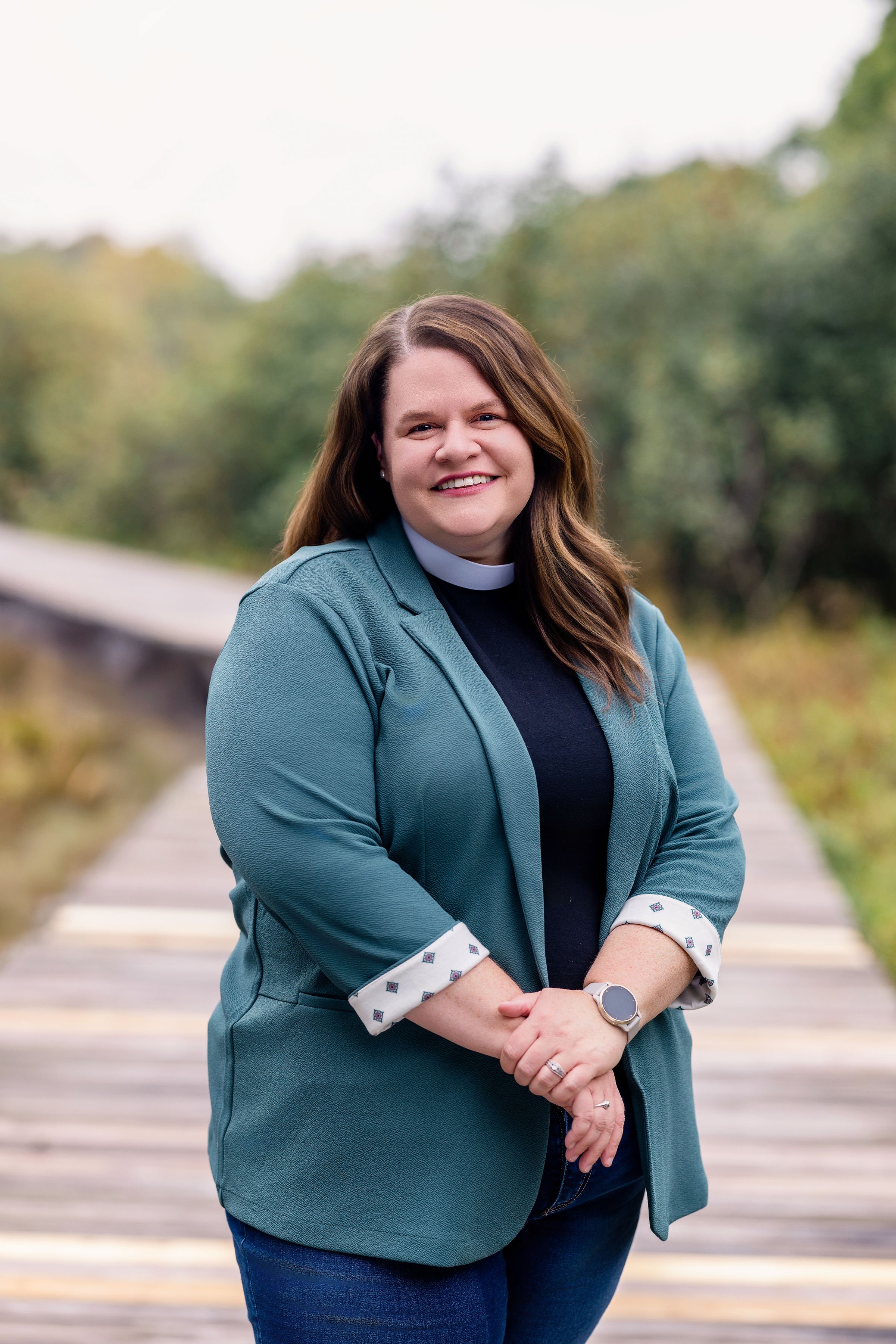
Pastor Jenn Pockat serves as Associate to the Bishop, Director for Relationships and Resources in the East Central Synod of Wisconsin.